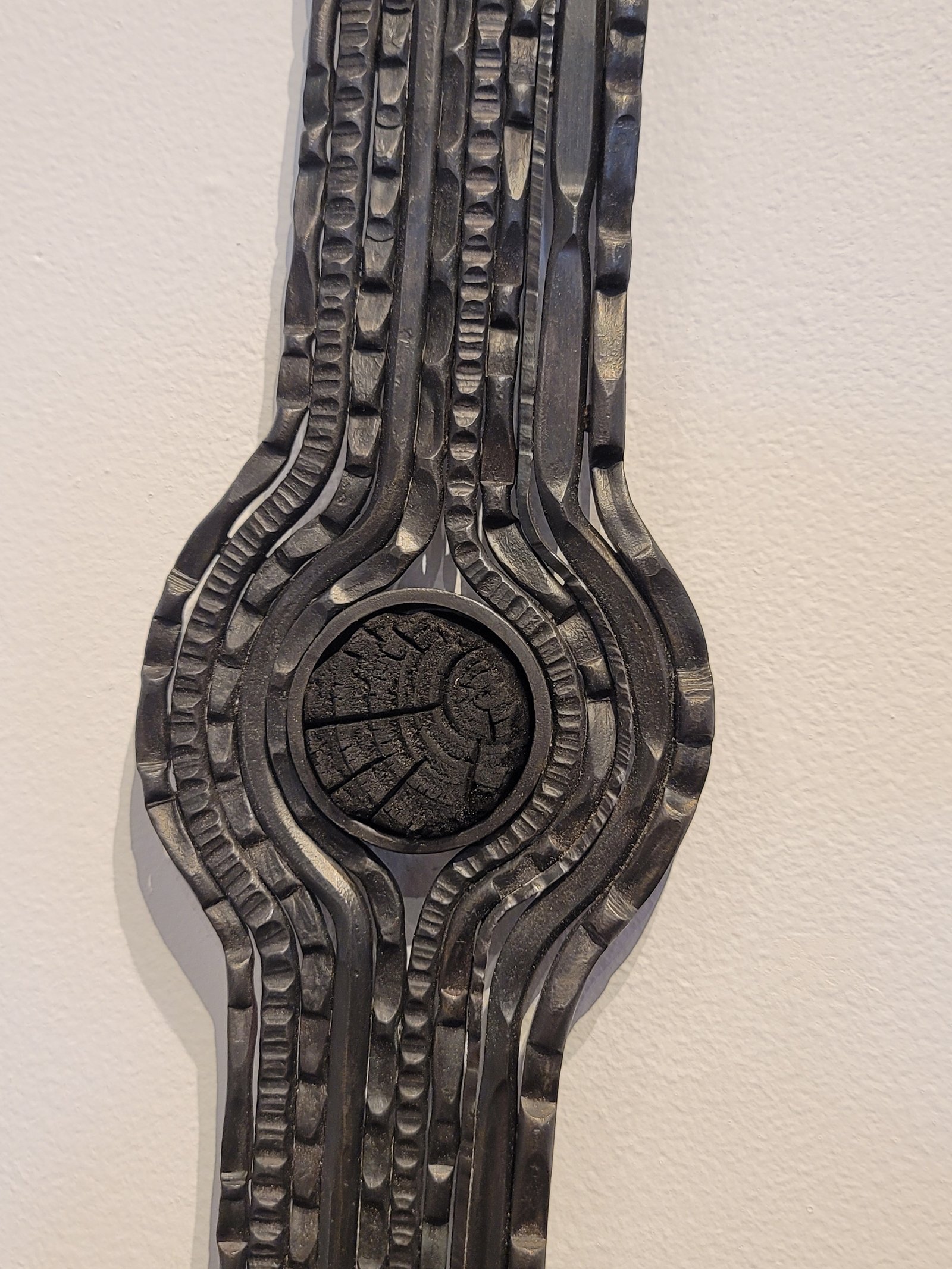
Carbon Record · Forged iron, with actual charred carbon at center · Currently in Material Mediations at JG Art Gallery, Bainbridge Island
Maria
Cristalli
Forged Iron · Sculpture
Lives and works in the woods outside Cle Elum, Washington
The forge is a studio where the material sets the schedule. Iron at working temperature is briefly compliant, then closes back into itself — and Cristalli works within those terms.
From the gallery's notes
Twenty-seven years at the anvil. The forge is where the material sets the schedule and the smith works within its terms. Iron at working temperature is briefly compliant, then closes back into itself. Cristalli reads color, timing, and resistance and works within those terms — and her pieces carry the evidence of every threshold crossed in their making.
She came to blacksmithing late and by accident. After earning a BFA in Photography from the University of Washington, a welding class in her late twenties became a doorway. She met Louie Roffloer of Black Dog Forge in Seattle and was hired to help expand the shop. While assisting Peter Ross at Haystack, she was urged to apprentice — and did, for two-and-a-half years each, with Jacob Howard and Darryl Nelson. Twenty-seven years later, the apprentice years remain visible in the work.
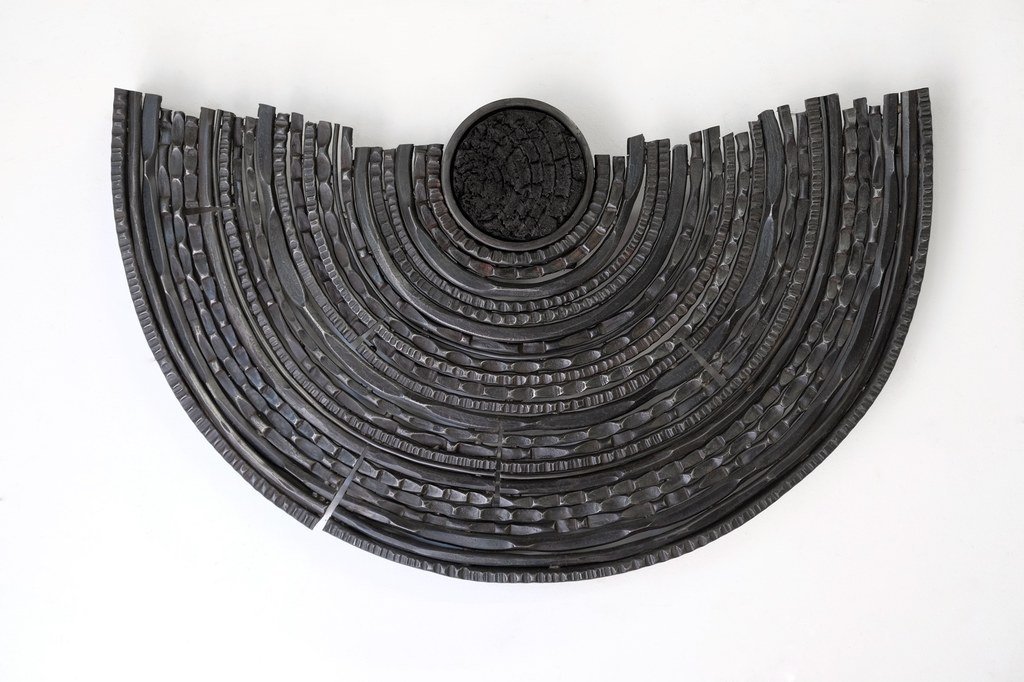
Her practice spans architectural ironwork, home furnishings, garden objects, and sculpture. The sculpture work is where the practice opens widest: forged forms that function as their own structure, surfaces that record fire as fact rather than effect, dimensional pieces that recall geological strata as readily as they recall industrial process. Carbon Record places actual charred carbon at the center of a half-moon of concentric forged iron pieces — an explicit conversation with material memory, made literal.
Blacksmithing is the oldest studio practice. The tools have changed very little in two thousand years because the material's requirements have not changed: iron becomes workable at specific temperatures, allows specific operations at those temperatures, and then closes back into itself when the heat is gone.
Cristalli works within those constraints. Her pieces hold the intelligence of timing — you can read in a finished forged form the sequence of decisions the smith made, which heats were used for which operations, where the material yielded and where it held. The finished work is not a record of the artist's intention alone, but of the negotiation between intention and iron.
That negotiation is what Material Mediations positions alongside McConnell's wood and Kyong's layered surfaces: three versions of making-as-conversation. Three different kinds of material intelligence, each visible in the finished work to anyone willing to look.
Four operations. All visible in the finished work.
The smith's intelligence is timing. Each step leaves evidence in the surface that the careful viewer can read back.
The blacksmith's window. Color tells temperature: orange-yellow is hot enough. Below this, the iron closes. Above, it burns. The iron is brought to working temperature in a coal or propane forge. The smith reads the color to determine when to remove it. This decision is time-sensitive.
Hammer blows move material. The direction of each blow determines where the mass goes. Skilled smiths work from a plan, but the material responds to each blow and conditions the next. The work is a conversation, not a dictation.
Using horn, step, or flat face of the anvil, the smith develops three-dimensional form. Curves, tapers, punched holes — each operation leaves evidence in the surface of the finished work.
Scale removal, grinding, or patination. Cristalli's finished pieces often retain hammer texture on surfaces where it reads as part of the form, not as an unfinished area. The decision to leave the marks is a curatorial one — what the work is willing to show.
Maria's practice, in detail.
Education & Formation
- BFAUniversity of Washington — Photography
- WeldingLate twenties — first iron exposureA welding class became the doorway to blacksmithing
- StudioBlack Dog Forge — SeattleHired by Louie Roffloer to help expand the shop
- WorkshopHaystack — assisting Peter RossThe encounter that sent her into formal apprenticeship
- ApprenticeJacob Howard — 2.5 years
- ApprenticeDarryl Nelson — 2.5 yearsThe apprentice years remain visible in the work
Public Commissions
- BellevueBellevue, WashingtonPublic commission
- NYCMorrison–Soundview StationMTA Arts for Transit
- EllensburgHotel WindrowArchitectural ironwork
Selected Exhibitions
- MemphisNational Ornamental Metals Museum
- HoustonHouston Center for Contemporary Craft
- BellevueBellevue Arts MuseumBellevue, Washington
- 2026Material Mediations — JG Art GalleryBainbridge Island, May 2 — June 4
Practice
- ArchitectureArchitectural ironworkGates · railings · structural elements
- GardenHome furnishings & garden objects
- SculptureSculpture — where the practice opens widestForged forms that function as their own structure
Studio & Career
- Cle ElumLives and works outside Cle Elum, WashingtonStudio in the woods
- 27 yrsTwenty-seven years at the anvilContinuous practice
Influences & Process
- MaterialIron — material constraints set the scheduleThe smith reads color, timing, and resistance
- SurfaceProcess-visible surfacesHammer texture retained as part of the form, not as unfinished area
- MemoryMaterial memory — fire as fact, not effectCarbon Record places actual charred carbon at center of forged iron
The aim is to push the boundaries of traditional blacksmithing technique while keeping the work modern and tactile — bold but graceful.
— Maria Cristalli
As featured in.
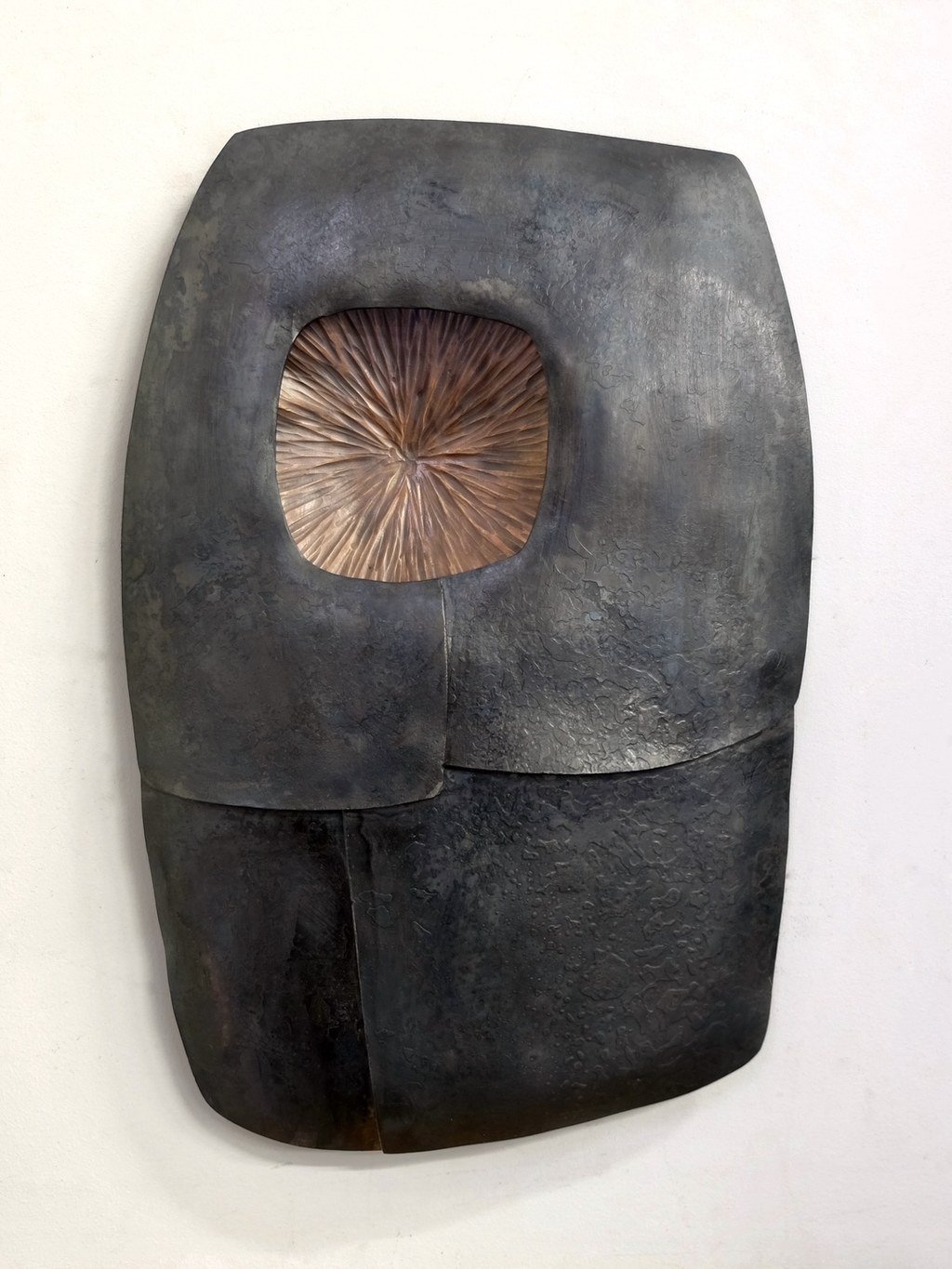
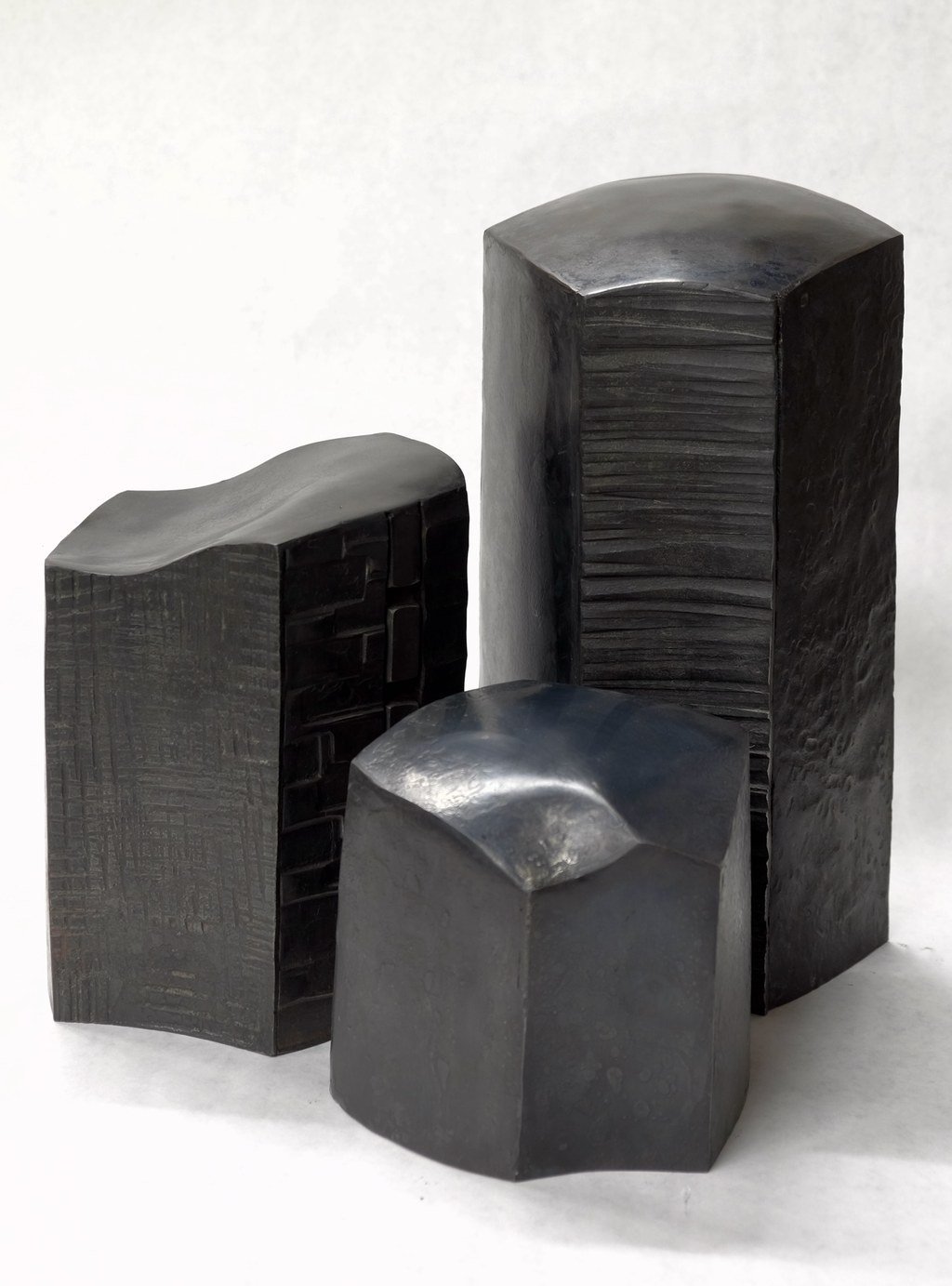
Three works in Material Mediations.
Each piece is currently at JG Art Gallery, Bainbridge Island, through June 4, 2026. The gallery responds within one business day with placement, dimensions, and indicated price for the work in question.
Material Mediations
Cristalli shows alongside Andy McConnell (wood and mixed media) and Jill Kyong (layered media) at JG Art Gallery's First Friday Art Walk. The three practices share a preoccupation with process-visible surfaces — work that holds the evidence of how it was made.
Cristalli's iron and McConnell's wood anchor the show in material weight; Kyong's accumulated layers provide a counterpoint in ephemerality and sequence.
- Opening reception
- May 2, 2026 · 5–8 PM · The artists will be present
- Run dates
- May 2 — June 4, 2026
- Location
- JG Art Gallery, 176 Winslow Way E, Bainbridge Island
- Getting there
- 20-minute walk from the ferry terminal
- Acquisition
- Cristalli's work is available directly through the gallery — worldwide shipping, payment plans, full provenance documentation
The gallery responds within one business day.
For current availability, pricing, or to commission new work — including architectural and garden-scale pieces — write directly. Private previews available by appointment.